Taking the Crown Down a Peg – Without Turning Politics Into a Punchline
Ridicule has a long history as a tool against entrenched power. Laughing at kings and queens challenges the idea that they deserve reverence simply by birth. In a republican campaign, humour can be disarming, viral, and deeply effective. But jokes alone do not redistribute wealth, reform constitutions, or end inequality. If humour becomes the message rather than the messenger, it risks replacing action with amusement. This piece argues for humour that illuminates injustice – not humour that distracts from it.
12/27/20253 min read


Humour can be a powerful tool in an anti-monarchy/pro-republic campaign because it:
Undermines authority: The monarchy often relies on a sense of dignity, tradition, and seriousness. Mocking them punctures that image, making them seem less grand, more human, and open to criticism.
Engages wider audiences: People are more likely to share and respond to funny content. Satire and jokes can reach those who might ignore more serious or angry political messages.
Deflates fear or reverence: In our society, respect for monarchy is ingrained. Humour can help people feel less intimidated about questioning it.
Highlights absurdities: Jokes often expose the contradictions or outdated aspects of monarchy (e.g., the immense wealth, the concept of being 'born to rule', or bizarre royal traditions).
Examples of mocking the monarchy:
British cartoonists like Ben Jennings often portray members of the Royal Family in ridiculous ways.
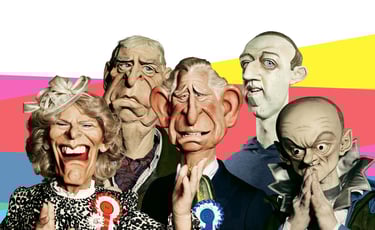
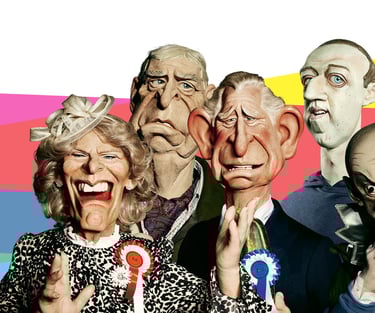
Spitting Image: In the 1980s and its 2020 reboot, the royals are portrayed as silly puppet caricatures.
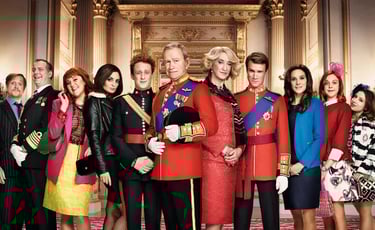
The Windsors (Channel 4 sitcom) parodies the Royal Family as soap-opera characters, exaggerating their real-life scandals.
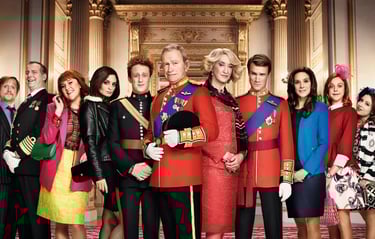
Stand-up comedians like Frankie Boyle and Stewart Lee have made biting jokes about the Royal Family’s privilege, irrelevance and double standards.
Memes and social media: In recent years, memes have mocked everything from Andrew’s scandals to the sheer expense of royal events amid cost-of-living crises. For instance, after Charles’s coronation, jokes circulated about the absurd cost of the golden carriage and the anointing oil
Joke examples:
Frankie Boyle: "They’re basically the UK’s version of the Kardashians. Except less hard-working."
Stewart Lee: "Nothing says modern democracy like an old lady waving from a golden carriage."
After Andrew’s scandal, memes mocked his "no sweat" excuse by photoshopping him into deodorant adverts.
The Risks Of Humour
1. Humour can make serious issues seem trivial
Risk: If everything is just a joke, people might not take the real problems seriously — like the monarchy’s role in inequality, colonial legacy, or misuse of public funds.
Example: Someone might laugh at a meme about the cost of a coronation, but still think, "Ah well, it’s just tradition, who cares?"
2. Humour can preach to the choir
Risk: Jokes often work best on people who already agree. If someone loves the monarchy, a meme mocking the King might just annoy them, not change their mind.
3. Humour alone doesn’t explain the alternatives
Risk: You can laugh at the monarchy, but unless you also explain what should replace it (e.g., a republic with an elected, ceremonial head of state like in Ireland), people might fear change.
Example: "Better the devil you know" thinking — people might stick with monarchy simply because the campaign didn’t offer a clear positive vision.
4. Humour can seem mean-spirited
Risk: If the jokes seem too cruel, it can backfire and create sympathy for the royals.
Example: Relentlessly mocking Charles's appearance could alienate people who otherwise don’t even like the monarchy much.
Humour opens the door, but facts, arguments, emotional appeals, and a clear alternative are needed to walk people through it.
A smart campaign should blend humour with seriousness: "Laugh at the absurdity — then realise the cost — then demand change."